ARTS AND ILLUSTRATIONS
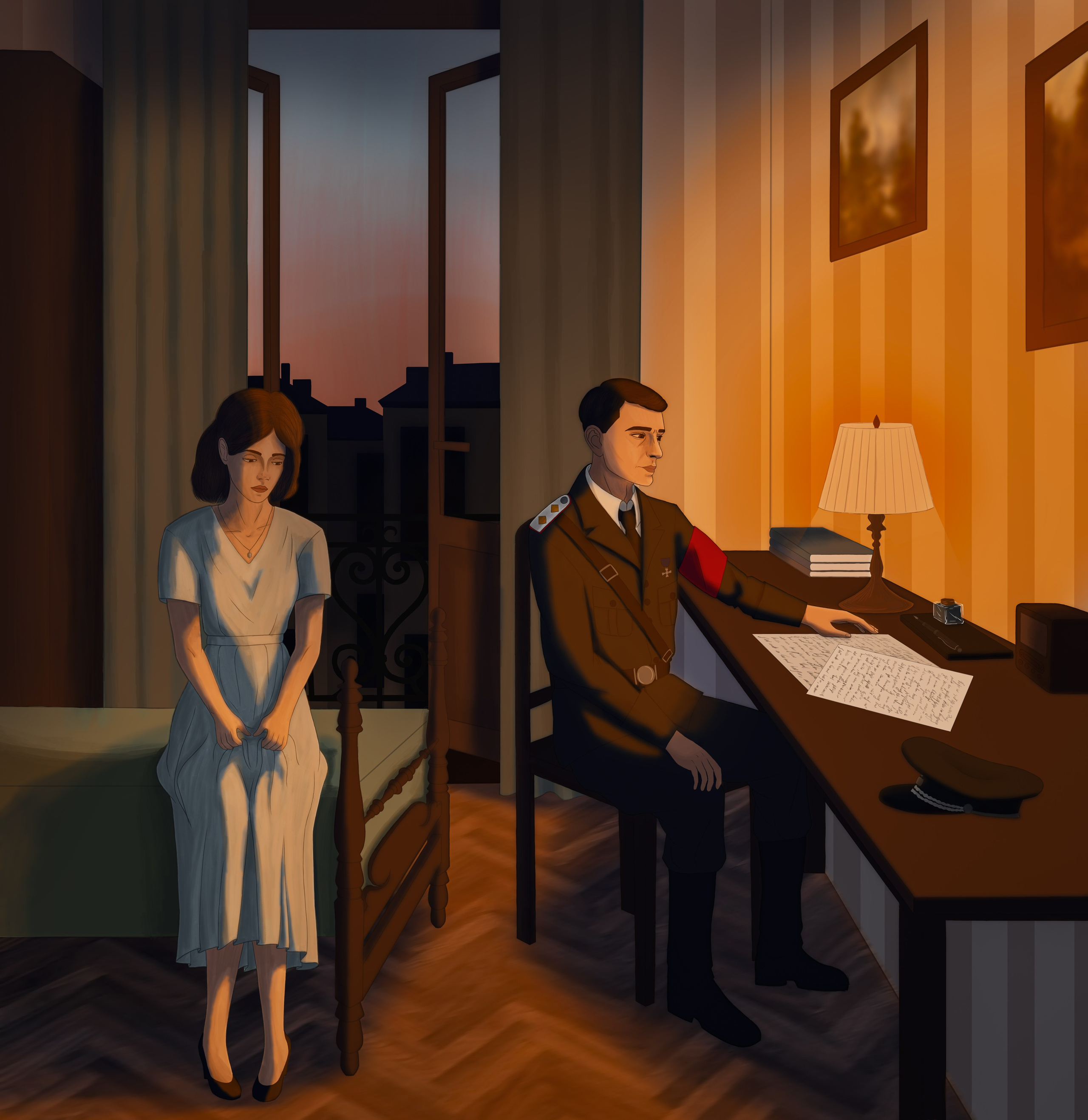
In Berger’s Apartment, 1936
⚠️ All images are part of an anti-war artistic project. The purpose of the work is to depict the tragedy of the individual within a totalitarian system. The uniforms shown are used solely as elements of historical authenticity and do not contain any symbols prohibited under the laws of many European and other countries, including the Federal Republic of Germany.
This illustration is nearly a year old — it was my first vision of the characters, how I imagined them from the beginning. In the summer of 2025 I began actively working on my novel. It is an unconventional work, combining a prequel section, a main narrative and a sequel-epilogue structured by year — told as a series of memories. The concept itself, however, traces back to May 8th of that year. This piece is not tied to any specific scene in the novel, yet it captures the tension and atmosphere of life in 1930s Berlin.
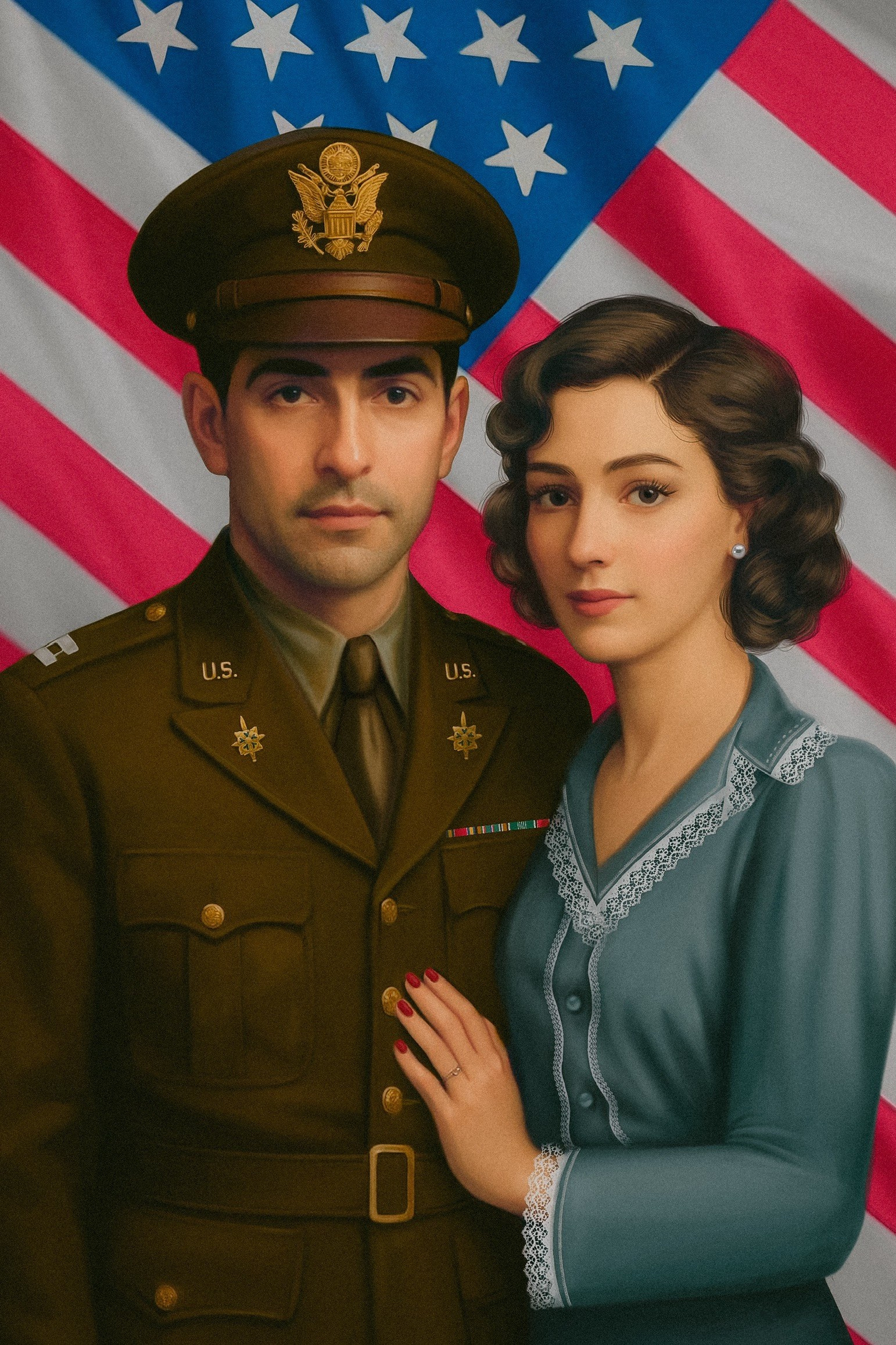
A Commemorative Post-War Portrait, 1945
This illustration can now be considered the official representation of my characters — how they look. The portrait is rendered in the classic style of postcards and commemorative photographs typical of 1940s family albums. Murad Sardar ended World War II as a Captain in military intelligence (European service 1944–1945: Sicily, France, and then the road to Berlin; he had been serving in the U.S. Army from the moment of his escape from Berlin, maintaining contacts with Central Intelligence). Every detail of this illustration carries the echo of the era — down to his wife Leah’s hairstyle and dress. Even their expressions seem far older than their years.
During his service, Murad was awarded the Bronze Star Medal for meritorious service in a combat zone, the Army Commendation Medal, the European–African–Middle Eastern Campaign Medal with campaign star (with distinction), and the World War II Victory Medal.
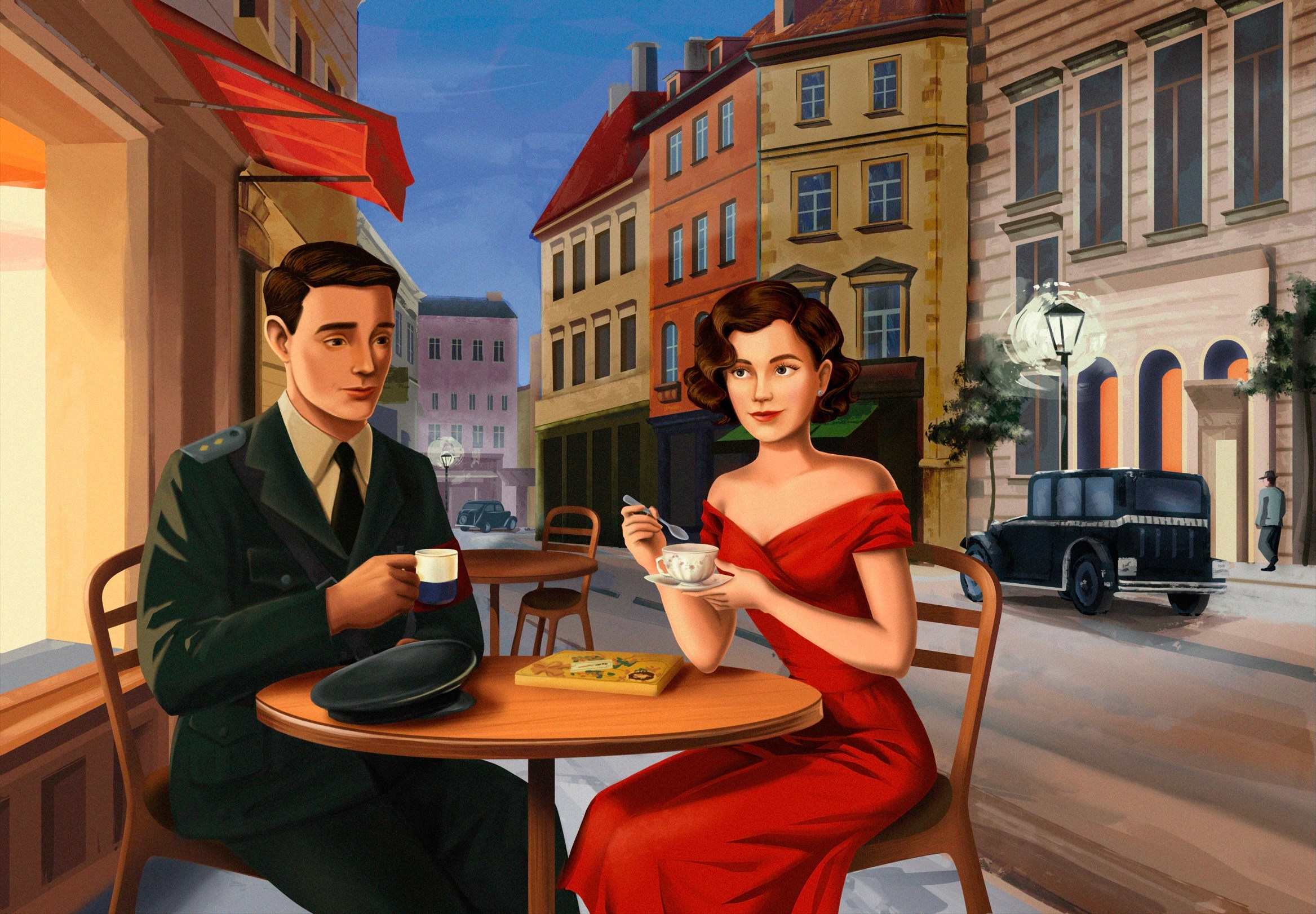
Two in the Imperial City (a scene from the heart of the novel)
⚠️ This image is part of an anti-war artistic project. The purpose of the work is to depict the tragedy of the individual within a totalitarian system. The uniforms shown are used solely as elements of historical authenticity and do not contain any symbols prohibited under the laws of many European and other countries, including the Federal Republic of Germany. (The author was inspired by the Soviet film “Seventeen Moments of Spring”.)
“We walked along cobblestone streets — banners again, neat shop fronts. She held my arm. A little closer than she should have. She wore a red dress. I wore a black uniform. The patch just below the left sleeve, the medal as if on parade. A cap with an eagle and a skull. Everyone we passed looked… Some with admiration, others with caution. But not a single indifferent glance.
The young men in uniform snapped to attention, the women whispered among themselves. They did not see us. They saw an image: a young SS officer and his companion — modest, proper. An ideal straight off a magazine cover.
I could feel her fingers tighten around my arm, just a little more than necessary. She noticed those looks too. But she did not tremble. On the contrary — she straightened up, chin raised just slightly higher. As though she were walking a red carpet, not the street of this empire. The empire of evil and lies.” — from the thoughts of Karl Berger.
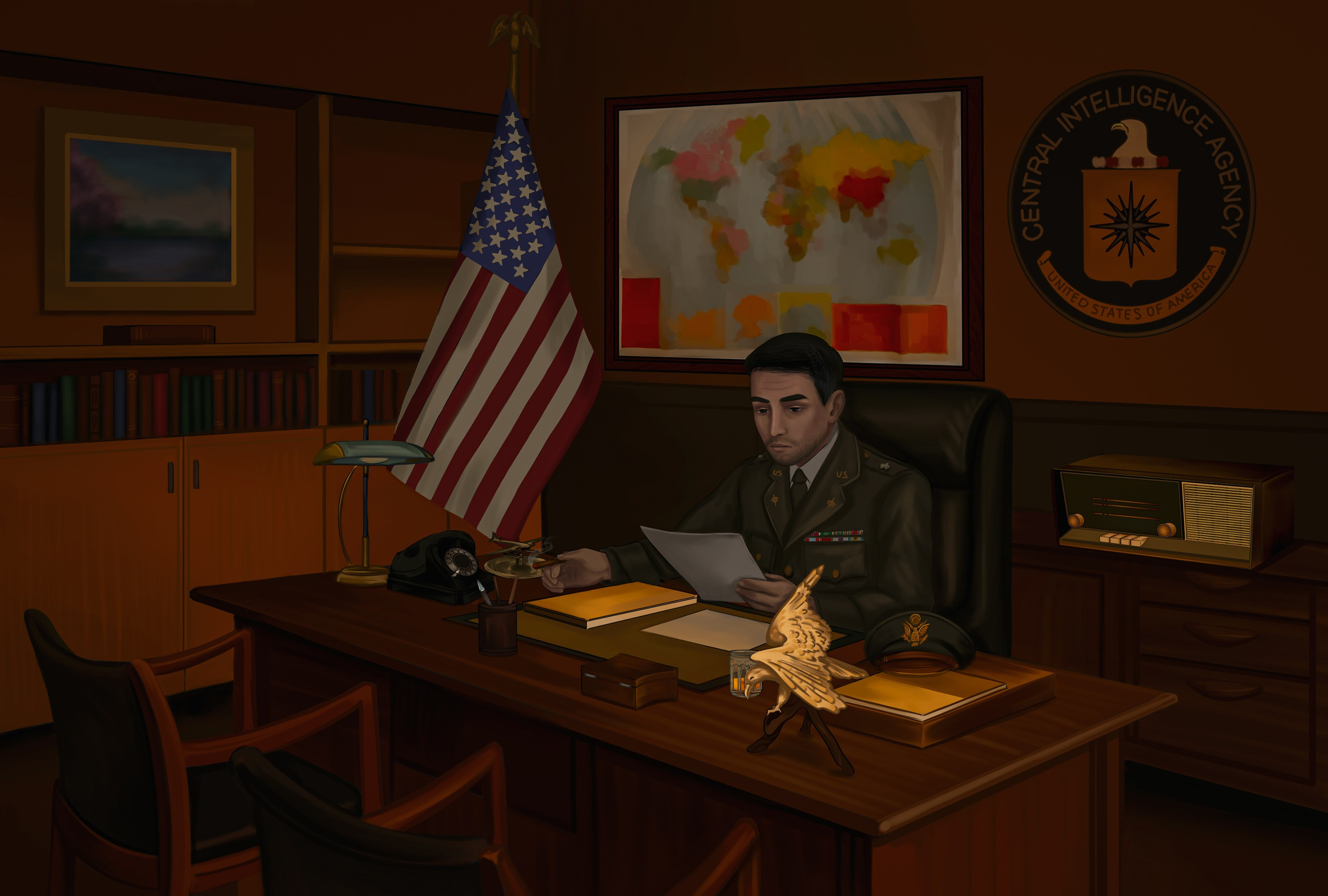
A Cold 1963 (a scene from the sequel)
By 1963, the protagonist holds the rank of Brigadier General and heads the First Directorate of the Agency. The office is rendered in detail — yet what matters most here is something else entirely… the silence, and the slow crackle of a cigar… a stillness you can almost feel.
For atmosphere, an excerpt from the novel:
“Central Intelligence, Virginia — across the Potomac, the District of Columbia and the White House. Murad drew on his cigar in his office. This city had already given him his third apartment, not counting the family home in Jersey City, New York, and the farmhouse in Utah. He was reading through old classified files, and his mind drifted back to Operation Teapot — to the moment he had watched the detonation. The way the mushroom cloud climbed above the test site. The way the wind reached his face first, and the sound came only a moment later. The agent had been standing far from the epicentre, as had all the other observers — whistling and applauding a successful test. Only Murad had stared at the flash without expression, as though under a spell. Ever since, a single thought had become a quiet mantra inside him: 'If someone moves to press the button, I must verify — I must confirm that the launch is real. I must not allow the President to press that button.'
Now Sardar was one of them. The most powerful intelligence service in the world, the First Directorate, the President’s office — no knock required. It had all left its mark on him. He had grown more assured, one might even say accustomed to his position. The highest league, as he liked to call it, was still just out of reach — but that he stood one step from the front row of the Capitol was no longer in doubt.”
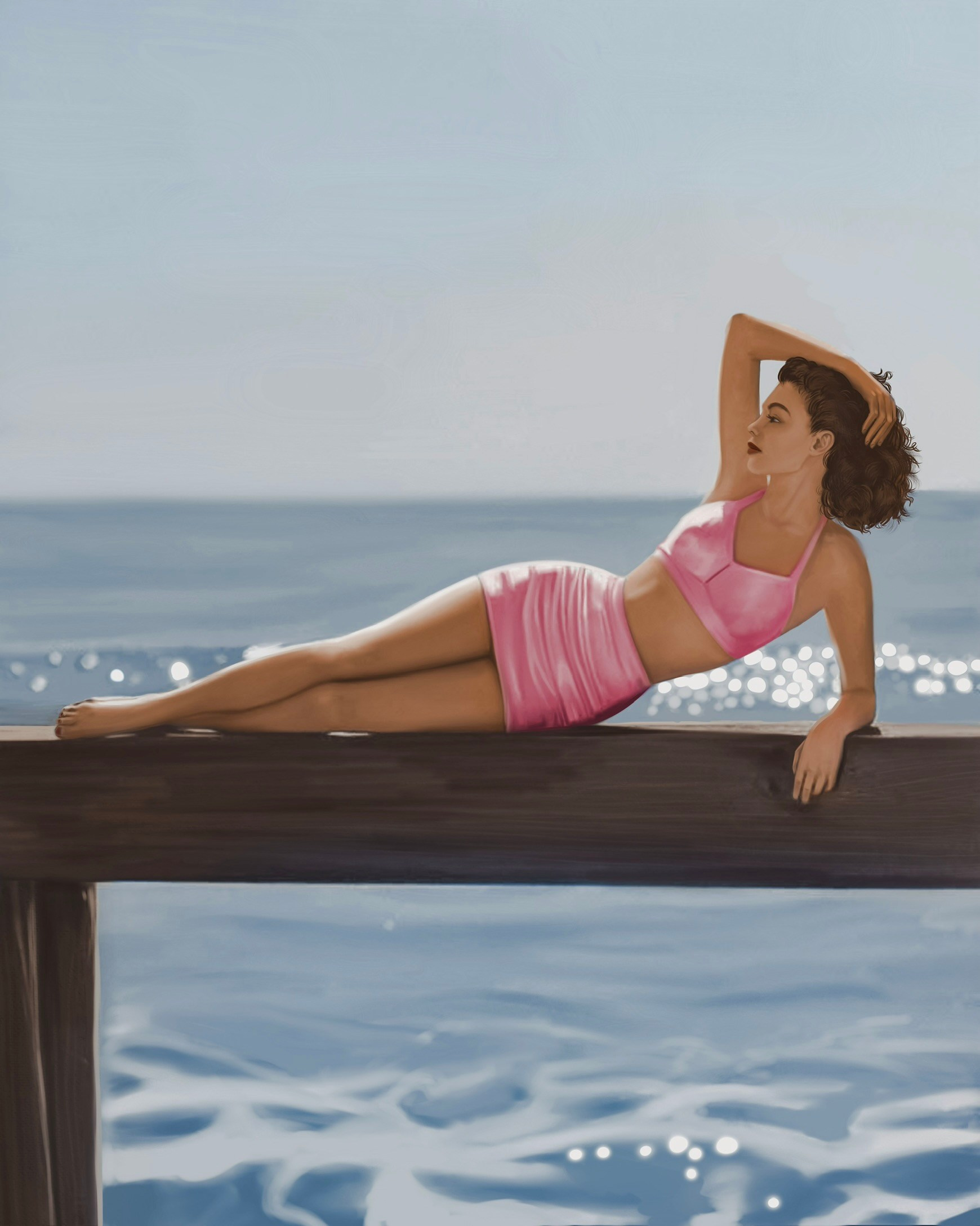
Leah Sardar, Vacation in Florida, 1963
A simple composition — like something from a Hollywood actress’s magazine spread, yet so tender. By 1963, the lady already has two children and is 44 years old, yet in spirit and in everything else she remains deeply young and childlike in her happiness.
From a conversation between Leah and Murad on the beach:
“His wife surveyed her surroundings like a cat, while her husband never missed an opportunity to take in Leah’s beauty, his gaze tracing the lines of her figure in her swimsuit.
— You’ll have me undressed in your head any moment now. You’ve been staring at me like one of those women in the magazines.
— The magazines lost their appeal a while ago. And yes — I’ve already undressed you. More than once. — her husband replied.
After a brief pause, she turned her head toward him:
— Go on, tell me my legs are better than Ava Gardner’s… — she said, propping herself up on her elbows.
— They are. You didn’t wear that swimsuit for nothing — I remember how you sulked when I couldn’t take my eyes off Monroe. — Murad replied evenly, shifting his gaze back to his newspaper.
— Mm, watch the walk, General. I’m going for a swim. — Leah said in her soft voice. Swaying her hips, she made her way to the water on tiptoe, like a panther in a tropical jungle deciding to take a swim. Murad watched the lines of her body once more, the way an artist studies a subject, while his wife cast her feline glance back over her shoulder.”
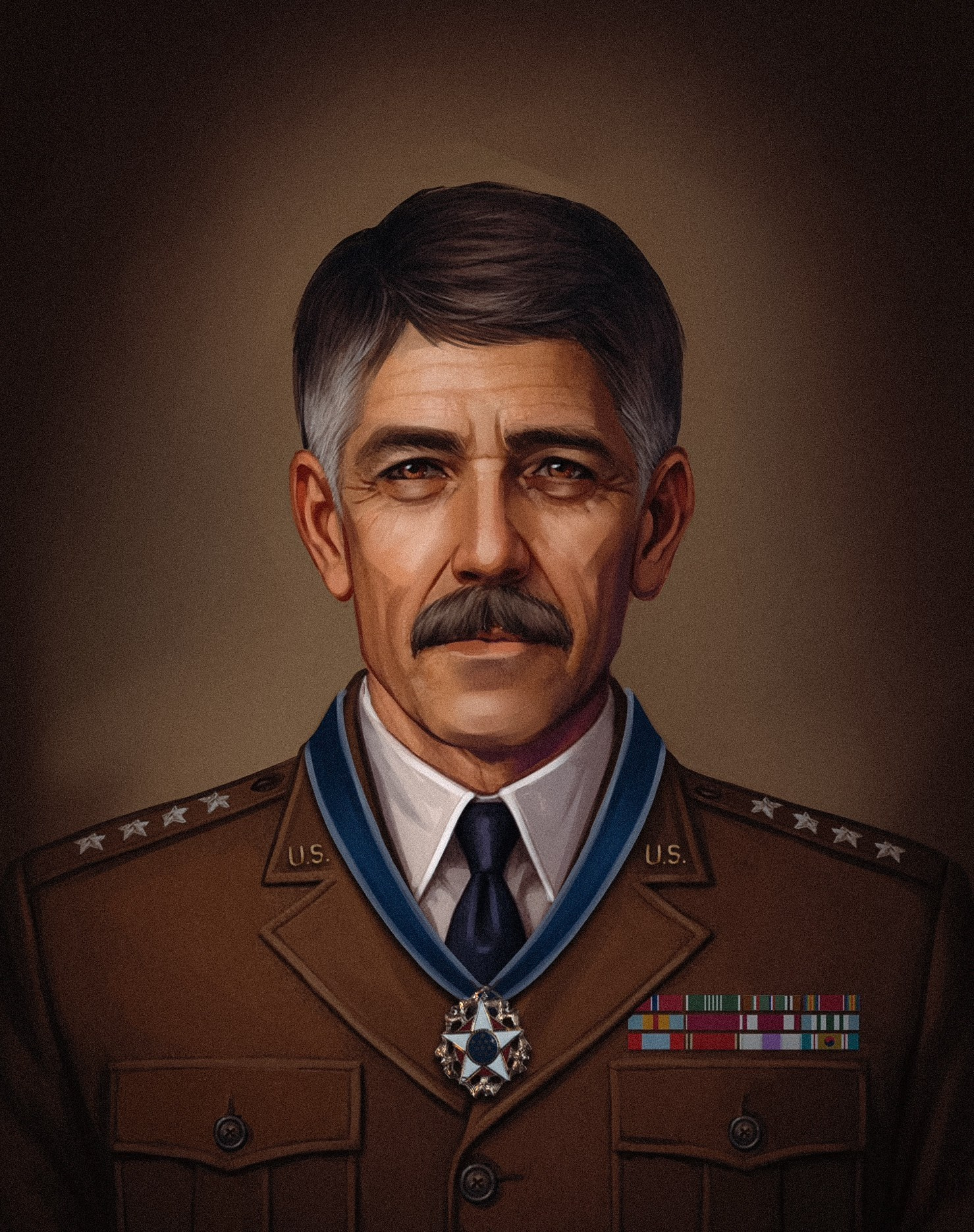
Pentagon Portrait, 1984
A man who… survived… this mad century… and perhaps came to understand it.
General Murad Sardar (4 stars, the highest rank in the United States Army, aged 72 in this portrait), Deputy Director of Central Intelligence.
Attention to detail is something I take great pride in — yet here I will simply say this: look into his eyes. That will tell you more than any observation about the “details” on his uniform.
A brief note on decorations:
A) Special Awards: Presidential Medal of Freedom (1984)
B) Medals and Orders:
- Bronze Star Medal for meritorious service in a combat zone
- Army Commendation Medal
- European–African–Middle Eastern Campaign Medal with campaign star
- World War II Victory Medal
- National Defense Service Medal
- Legion of Merit
- Distinguished Service Medal
- Joint Service Commendation Medal
C) Foreign and International Awards:
- Croix de Guerre with Foreign Theatres device (France)
- Order of Merit of the Federal Republic of Germany
- Military Cross (United Kingdom)
- Korean War Service Medal (Republic of Korea)
Decorations of Nazi Germany:
Long Service Award, 4th Class / Dienstauszeichnung 4. Stufe (visible on the very first artwork and the comic book cover) — a cross on a blue ribbon. Prior to his enlistment into the SS staff service, his years working as a secretary in the Reichstag were officially credited as civil service through a special party decree (SS-Dienstzeit). This exceptional bureaucratic credit allowed him to be prematurely awarded this entry-level 4-year service cross.
⚠️ The author references the names of orders and medals solely for historical accuracy and realism, and for no other purpose.

First Morning, Berlin, 1936
⚠️ 18+ (an illustration with philosophical undertones; all details are used for historical authenticity and do not glorify or justify any anti-human ideology)
A few words to set the scene:
“She woke before him and reached for her tea. He had not yet buttoned his shirt, and already held a newspaper in his hands.
When you are forced to perform even the appearance of 'correct behaviour' — you find yourself subscribing to and reading things you cannot accept within yourself.
The pages carried conspiracies, slogans, loud words that seemed to freeze the world solid.
He was trying, once again, to step back into the system. But her gaze — calm, faintly amused — brought him back to the place where he was real.
That night, her first, she understood him before he understood himself. And this morning became the finest of mornings — because in this city, where even a family is subject to laws and protocols, they remained simply two people.”
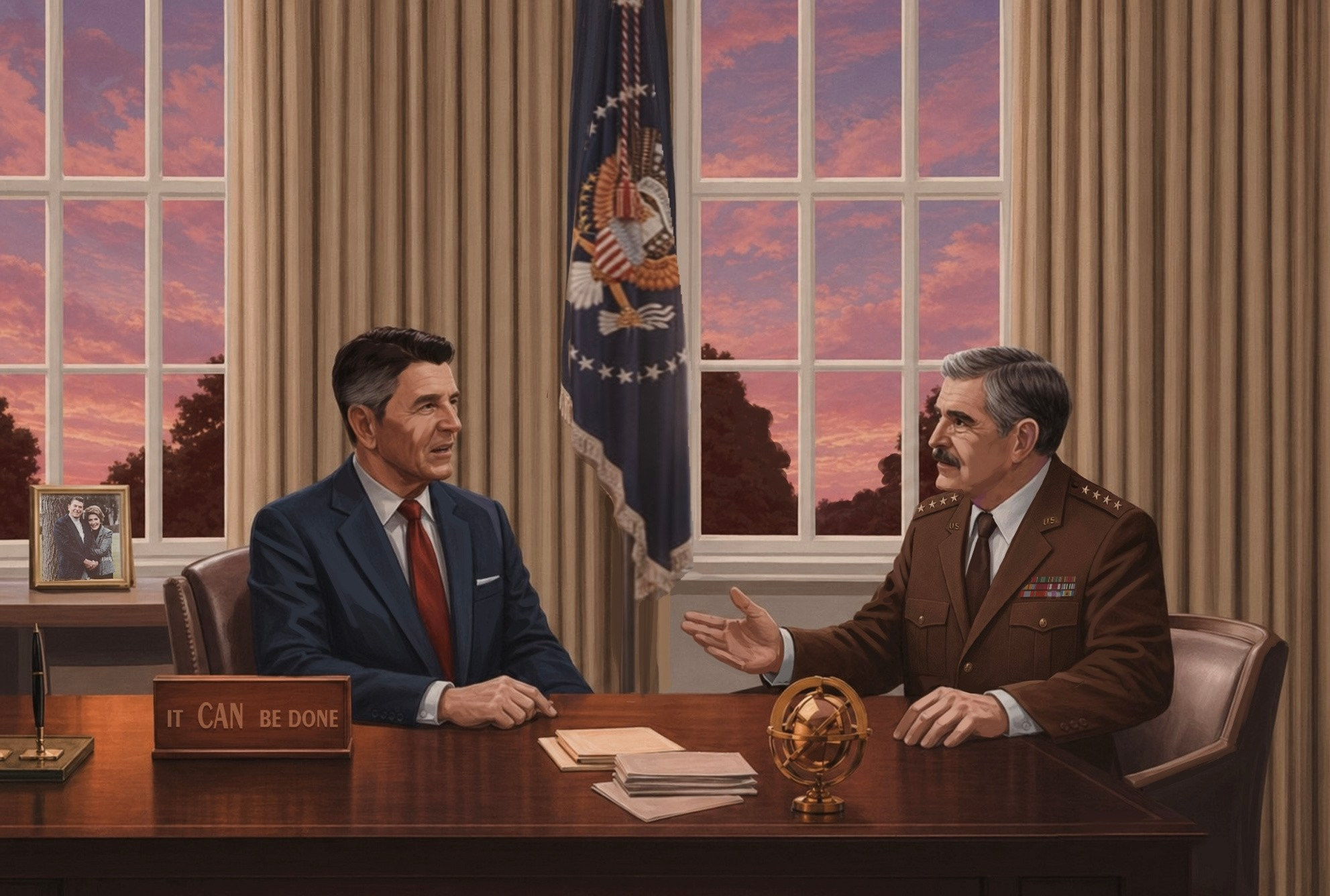
The beginning of new era, Oval Office, autumn 1983
Reagan was leafing through papers; Murad stood at the window. At last, having taken in the full view of the lawn, he sat down across from him.
— Ronnie. Your opponent is Mondale. A senator, a former Vice President, a Washington man to his bones. Don’t underestimate him.
— My colleagues in the administration already brought champagne. Someone said: the numbers speak for themselves.
— The numbers spoke for Carter too… Remember 1981, Mr. President… — Murad leaned toward him. — We work as if it’s the last time. Always. Especially against someone I know personally.
Reagan set down his papers and smiled.
— Well, I’m glad to have a strategist like you on the team. Especially when it comes to Washington opponents. Have you heard Lee’s song?
— I have. — Murad paused for a moment. — Too good for a campaign ad. But with it — you’ll carry a whole list of states.
— Why do you believe that?
— Because songs like that aren’t made for ads. They’re made for people who had something broken inside them — and then it healed. — He looked at Reagan. — Lee wrote it with soul and pain. You can hear it.
Ronnie watched him.
— It got you?
— No. — Murad picked up the papers from the table. — It swept over me. It’s about me and for me… And about thousands of others who want the future to be something other than fog.